BK Nation Founder and Author Visits Castillo de San Marcos
August has historically been a month of strategic military significance, featuring battles that shaped empires, ended dynasties, and influenced global politics. From ancient tactics at Cannae to modern conflicts like the Gulf War, these engagements highlight the enduring impact of warfare on world history.
In keeping with this theme of military significance, I wanted to present to some and introduce to others a town outside of Jacksonville Florida that I visited numerous times: St. Augustine, Florida. St. Augustine, founded in 1565, is the oldest continuously occupied European-established city in the continental United States. It was established by Spanish explorer Pedro Menéndez de Avilés in 1565 to counter French Huguenot settlements. The city has endured multiple attacks, including English raids in 1665, 1702, and 1740, and even a brief Civil War surrender to the Union navy, reflecting its strategic importance over centuries.
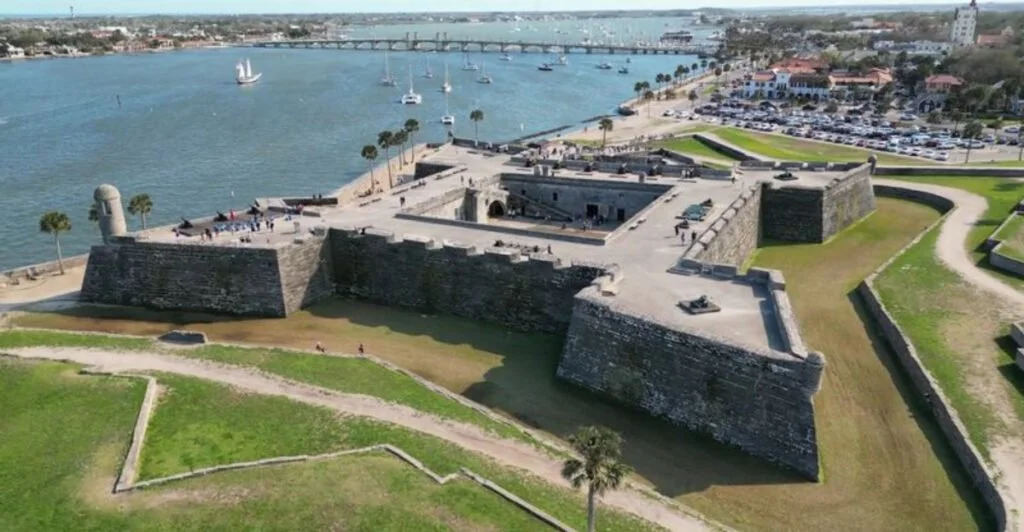
Castillo de San Marcos
The Castillo de San Marcos, built by the Spanish between 1672 and 1695, is the oldest masonry fort in the continental United States and a symbol of colonial military engineering and resilience. The Castillo de San Marcos was commissioned after an English privateer, Robert Searle, raided St. Augustine in 1668, destroying much of the town and its wooden fortifications. Spanish Governor Francisco de la Vega ordered the construction of a more durable stone fort, and work began under Manuel de Cendoya in 1672.
Designed by Spanish engineer Ignacio Daza, the fort was built using coquina, a durable limestone composed of compressed shells quarried from nearby Anastasia Island. Its construction took over 20 years, with the core completed by 1695, and featured a bastion fort design with four diamond-shaped bastions, a deep moat, and drawbridges to maximize defensive coverage and control access to the interior
Military Significance
The fort served as the northernmost outpost of Spain’s New World empire, protecting St. Augustine and the Florida coastline from pirates and rival European powers. It was attacked and besieged twice: by English forces under Carolina Governor James Moore in 1702 and by Georgia Governor James Oglethorpe in 1740. Despite these assaults, the fort was never captured due to its strategic design and cannon placement.
Over the centuries, it changed hands peacefully among Spain, Britain, and the United States, including a period under Confederate control during the Civil War.
Preservation and Legacy
Declared a National Monument in 1924, the fort was decommissioned in 1933 and transferred to the National Park Service. Today, it stands as a well-preserved example of Spanish ingenuity, offering insights into 17th-century military engineering, and the cultural history of St. Augustine. Visitors can explore its bastions, moat, and museum exhibits, which highlight the fort’s role in shaping the region’s history.
The Castillo de San Marcos remains a testament to the enduring legacy of Spanish colonialism, the strategic importance of Florida in European and American history, and the resilience of a structure that has withstood centuries of conflict and environmental challenges.
Historical Events in August

August 1, 1944 - Anne Frank penned her last entry into her diary. Three days later, Anne and her family were arrested and sent to Nazi concentration camps. Anne died at Bergen-Belsen concentration camp on March 15, 1945, at age 15.
August 2, 1923 - President Warren G. Harding died suddenly in a hotel in San Francisco while on a Western speaking tour. He was succeeded the next day by Calvin Coolidge.
August 3, 1492 - Christopher Columbus set sail from Palos, Spain, with three ships, Nina, Pinta and Santa Maria.
August 4, 1964 - Three young civil rights workers, James Chaney, Andrew Goodman and Michael Schwerner, were found murdered and buried in an earthen dam outside Philadelphia, Mississippi. They were participating in the Mississippi Summer Project organized by the Student Nonviolent Coordinating Committee (SNCC) to increase black voter registration.
August 5, 1861 - President Abraham Lincoln signed into law the first Federal income tax, a 3 percent tax on incomes over $800, as an emergency wartime measure during the Civil War. However, the tax was never actually put into effect.
August 6, 1945 - The first Atomic Bomb was dropped over the center of Hiroshima at 8:15 a.m., by the American B-29 bomber Enola Gay.
August 7, 1990 - Just five days after the Iraqi invasion of Kuwait, President George Bush ordered Desert Shield, a massive military buildup to prevent further Iraqi advances.
August 8, 1945 - Soviet Russia declared war on Japan and sent troops into Japanese-held Manchuria.
August 9, 1974 - Effective at noon, Richard M. Nixon resigned the presidency as a result of the Watergate scandal. Facing possible impeachment by Congress, he became the only U.S. President ever to resign.
August 10, 1821- Missouri was admitted to the United States as the 24th state, a significant milestone in the westward expansion of the United States.
August 11, 1990 - The Major League Baseball Players Association begins a labor strike, leading to the cancellation of the remainder of the season, including the World Series.
August 12, 1981 - IBM introduced its first personal computer, the IBM Personal Computer.
August 13, 1961 - East Germany began construction of the Berlin Wall, dividing East and West Berlin.
August 14, 1935 - President Roosevelt signed the Social Security Act establishing the system which guarantees pensions to those who retire at age 65. The Social Security system also aids states in providing financial aid to dependent children, the blind and others, as well as administering a system of unemployment insurance.
August 15, 1947 - India gained independence from British rule.
August 16, 1977 - Elvis Presley dies at Graceland in Memphis at age 42, ending the career of the performer who revolutionized American popular music and created the template for modern celebrity.
August 17, 1945 - Korea is separated into North and South Korea along the 38th parallel.
August 18, 1938 - President Franklin D. Roosevelt dedicates the 1,000 Islands bridge, connecting the US and Canada.
August 19, 1692 - Five people are hanged for allegedly practicing witchcraft as a result of the Salem witch trials in Massachusetts Bay Colony.
August 20, 1866 - The Civil War formally declared over by President Andrew Johnson.
August 21, 1959 - Hawaii was admitted as the 50th state of the United States.
August 22, 1485 - Henry Tudor defeats Richard III at Bosworth Field, ending the Wars of the Roses and establishing the Tudor dynasty that will produce Henry VIII and Elizabeth I.
August 23, 1914 - Japan declares war on Germany in World War I.
August 24, 1814 - British troops set fire to the White House and other buildings in Washington, D.C., during the War of 1812.
August 25, 1944 - Allied forces liberate Paris from Nazi occupation as General Charles de Gaulle leads a triumphant march down the Champs-Élysées, restoring French pride after four years of humiliation.
August 26, 1920 - The 19th Amendment to the U.S. Constitution was certified, granting women the right to vote.
August 27, 1776 – During the American Revolution War, the British defeated the Americans in the Battle of Long Island.
August 28, 1963 – Dr. Martin Luther King Jr. delivers his famous “I Have a Dream” Speech at Washington D. C.
August 29, 2005 - Hurricane Katrina strikes the Gulf Coast as a Category 3 storm, breaching New Orleans’ levees and flooding 80% of the city in America’s deadliest natural disaster since 1928.
August 30, 70 AD - Roman forces under Titus end the siege of Jerusalem by destroying Herod’s Temple, dispersing the Jewish population and marking the end of Second Temple Judaism.
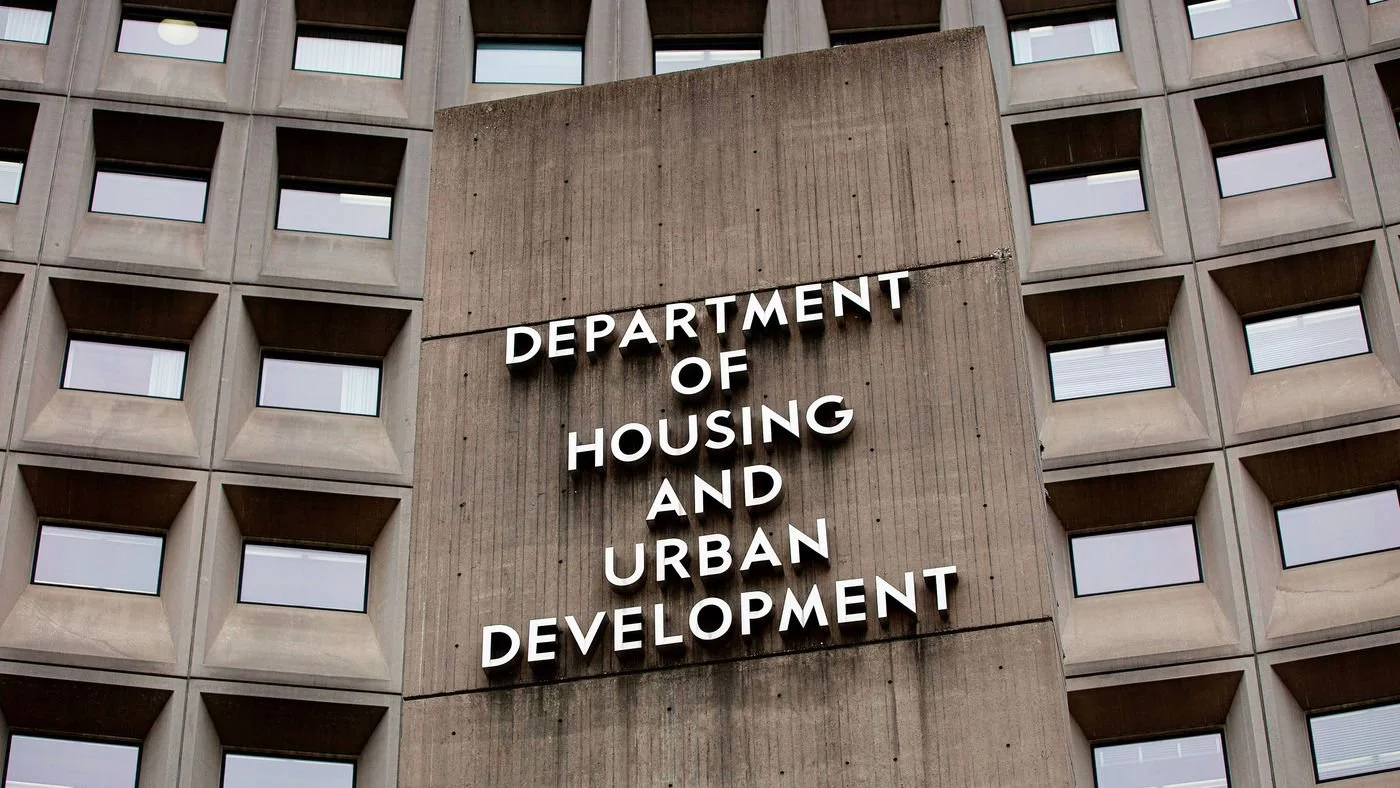
August 31, 1965 - US Congress establishes Department of Housing & Urban Development.
FINAL THOUGHTS
As we transition into the autumn month, many of us will spend time hiking, going on cruises, prioritizing favorite activities and of course, watching college and pro football. As I was searching the internet, I was surprised to see so many book fairs springing up all over the country. Could this be a resurgence in reading among our youth? So far, I like what I’m seeing. We need to keep the momentum going by purchasing a book for our children and young adults before they start school. I recommend books such as “Little Women” by Louisa May Alcott, Nancy Drew Mystery Books by Carolyn Keene and “The Autobiography of Miss Jane Pittman” by Ernest J. Gaines. For those history lovers, I think you’ll enjoy reading “Killer Angels” by Michael Shaara, “Johnny Tremain” by Esther Forbes and Lew Wallace’s “Ben Hur.” If you really feel ambitious, try reading Leo Tolstoy’s “War and Peace”, it's only roughly 1,200 to 1,400 pages, depending on the edition and translation.
If you want something light, try word search puzzles. Research shows that people who solve word search puzzles tend to improve cognitive skills, memory, and reasoning skills. That sounds like a good deal! I have uploaded five historical word search puzzles you can download by clicking HERE. This month’s theme is Patriotic Symbols. Until next time, enjoy the rest of your summer and stay tuned for my next newsletter in September.