
During the month of November, Americans all over the country will be celebrating Native American Heritage Month. This is a federally recognized observance that honors the enduring legacy, achievements, and contributions of Native American and Alaska Native peoples while fostering awareness, education, and cultural preservation for future generations.
Native American Heritage Month traces its roots to early 20th-century advocacy by Dr. Arthur C. Parker, a Seneca archaeologist and director of the Rochester Museum and Science Center, who campaigned for a federal recognition day for Native Americans. New York State first recognized “American Indian Day” in May 1916, setting the stage for broader national observances. It was first federally recognized in 1990 when President George H. W. Bush proclaimed November as National American Indian Heritage Month.
Purpose and Significance
The month celebrates the traditions, languages, and stories of Native American and Alaska Native communities, highlighting their contributions to the nation’s culture, history, and society. It also provides an opportunity to acknowledge past injustices that have had long-lasting social, economic and educational challenges that have plagued these indigenous people.
Celebrations and Observances
Native American Heritage Month is marked by a variety of events, parades, and educational programs across the United States. Institutions such as the Library of Congress, National Archives, Smithsonian Institution, National Park Service, and National Endowment for the Humanities will be hosting exhibitions, lectures, and cultural activities throughout the month. National parks and local communities offer guided hikes, field trips, as well as virtual and in-person events, including arts, crafts, music presentations, and storytelling, to ensure that the rich diversity of Native American cultures continue to be recognized and celebrated.
Thirty Interesting Facts about Native Americans
-The U.S. has 574 recognized tribes. Of the 574 recognized tribes, 229 reside in Alaska. California is the state with the second-most Native Americans after Alaska, with 109 federally recognized tribes. Also, it is home to the largest number of Native Americans.
-The Native Americans spoke over 300 languages. Before colonization, there were more than 300 languages spoken in North America, with as many as 500 of them. However many of these languages are now dead because of assimilation policies implemented by the government.
-Several of the most significant crops in the world were grown by Native Americans such as corn, beans, potatoes, tomatoes, squash, and other crops.
-The Indian Relocation Act of 1830 resulted in the forcible relocation of Native Americans The Native Removal Act was ratified by Andrew Jackson in 1830. As a result of the law, Native Americans were forcibly relocated from Florida, Alabama, North Carolina, Tennessee, and Georgia to “Indian territory” in what is now Oklahoma. Many native Americans perished while making these forced journeys.
-On June 2, 1924, President Calvin Coolidge approved the Indian Citizenship Act
which granted citizenship to Native Americans.
-The Navajo Nation has the most tribal land in the country.
-The contribution of Navajos to the WWII effort was vital. The U.S. government
employed skilled Native Americans, commonly known as code talkers, who knew the Navajo language to transmit top-secret intelligence to allies during World War II.
-Iroquois Governance Inspired the U.S. Constitution. Long before the U.S. drafted its Constitution, the Iroquois Confederacy ran a sophisticated government rooted in balance and consensus. The Founding Fathers borrowed their model of federated power and Benjamin Franklin even attended tribal councils.
-Sequoyah created the Cherokee Writing System. Without formal schooling, Sequoyah invented a written syllabary for the Cherokee language in 1821. His work skyrocketed Cherokee literacy rates almost overnight and by 1830, the Cherokee Phoenix became the first Native-run newspaper using this written system.
-Oral Traditions Preserved Native History. Native communities passed down their
history through storytelling. Grandparents shared legends by firelight stories that held law and identity.
-Native Cultures Were Regionally Distinct. Not all Native cultures were alike. From the birch bark canoes of the Northeast to buffalo hide on the Plains, geography shaped identity. Cultural regions included the Plateau, Southeast, Great Basin, and others.
-Native Americans have served in every major U.S. conflict, from the Revolutionary War to Afghanistan. During WWII alone, over 44,000 Native troops served, with tribal communities often honoring veterans with ceremonies and eagle feathers.
-Wounded Knee Protest Sparked a Rights Movement. In 1973, American Indian Movement activists occupied Wounded Knee to protest corruption and broken treaties. The standoff lasted 71 days. It led to Senate hearings on policy and re-energized tribal sovereignty debates. AIM chapters soon expanded nationwide, focusing on education and justice system reform.
-Tribal Treaties Hold Legal Authority. A treaty is a legal promise—binding, not
symbolic. The U.S. signed hundreds of them with Native nations, often breaking them later. But they're still enforceable under the Constitution, and Supreme Court rulings, like McGirt v. Oklahoma (2020), have upheld treaty boundaries.
-Utah is named after the Utes, a people who lived on the edge of the Plains and the Great Basin. Oklahoma is from the Choctaw okla homma, which means “red people.
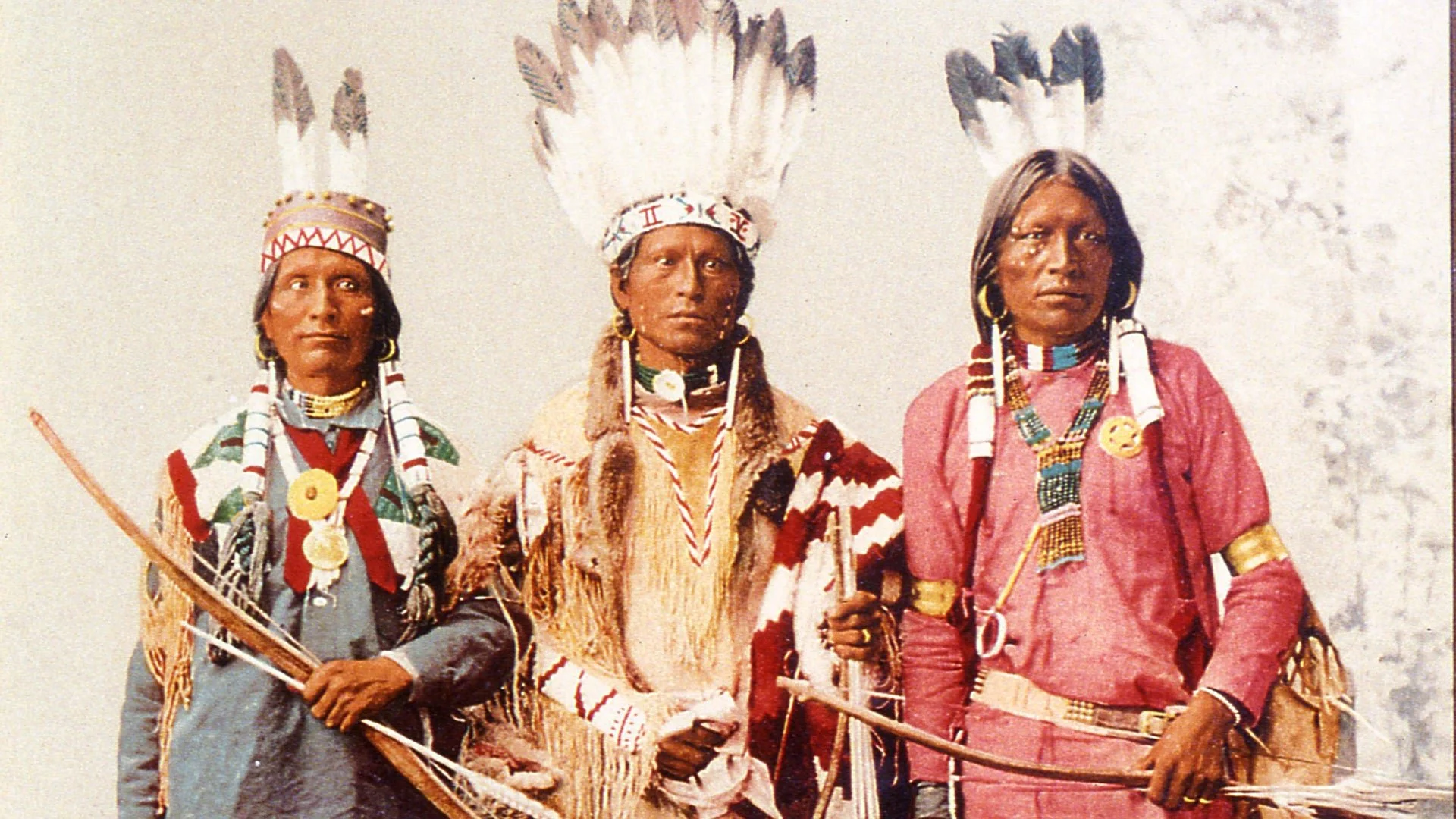
-The Nez Perce people helped Lewis and Clark explore the Northwest Territory. They built canoes for them, drew maps of the rivers, and helped them reach the Pacific.
-Some of the Plains tribes built scaffolding or used trees to hold a dead body above ground to protect it from wild animals while it decayed. The Huron people placed the dead body in a coffin and kept it above the ground on poles for up to 12 years before the bones were buried.
-The Mohawk hairstyle is named after the Mohawks, one of the tribes that made up the Iroquois nation. The Mohawk people also liked to keep one side of their scalp cleanly shaven while the other side was painted a bright color.
-The Iroquois celebrated a winter festival similar to trick-or-treating. A small group of teenagers were led singing and dancing around the village by an older woman. They stopped outside people’s houses and waited for presents to be brought out to them.
-The Green Corn ceremony is a harvest thanksgiving ceremony that took place, and still does, among Native Americans in the Southeast and Northeast. Thirty or more people dance in pairs, give thanks to the spirits, and then eat a large feast.
-Many Native American women were sharpshooters and able horsewomen.
-Even though they were not citizens, over 8,000 Native Americans served during WWI.
-There are about 4.5 million people of Native American and Alaska Native Heritage in the U.S. This group makes up about 1.5% of the U.S. population.
-Europeans introduced several new and fatal diseases to the Native Americans. The most well-known disease was small pox, which decimated the Native Americans. Other killers included cholera and measles.
-Lacrosse was first played by people of the Southeast, especially the Choctaw. French settlers thought the stick looked like a Bishop’s crosier (hooked staff), so when they introduced it to Europe, they called it La Crosse, which became lacrosse.
-The Ghost Dance was a late addition to Native American belief systems, appearing around 1890. It was believed that the ritual dance would help restore the old way of life before the arrival of the Europeans. The dance promised the return of the buffalo and communication with the spirits of the dead. Although the Ghost Dance was peaceful, army authorities outlawed its performance.
-The projected U.S. population of American Indians and Alaska Natives for July 1, 2060, is estimated to be 11.2 million, which will make up about 2.7% of the U.S population.
-A young girl born on an Indian reservation has a 1 in 3 chance or higher that she will be abused during the course of her life. Native women experience the highest rates of assault of any group in the United States. This is partly because of complex jurisdiction laws of non-Native Americans who persecute Native women on tribal lands.
-Sites of Native American villages became trading posts, and then forts or villages, and later major cities—for example, Chicago, Detroit, St. Louis, Kansas City, Pittsburgh, Pocatello, and many others.
-The Sequoia tree is named in honor of the Cherokee leader Sequoyah, who helped his people develop an alphabet.
PARTING THOUGHTS
Yes, this is an exciting time indeed! As we celebrate Native American Month, I urge you to check out a book from your local library, purchase a book on the various platforms or even attend an educational event in your city/town to learn more about these remarkable people who continue to make significant contributions in all areas of American society. As a tribute to Native American Month, I have created and uploaded some word search puzzles for you to download by clicking HERE. Enjoy and stay tuned for my next newsletter in December.