An interview with Iconic Game Designer Richard Borg
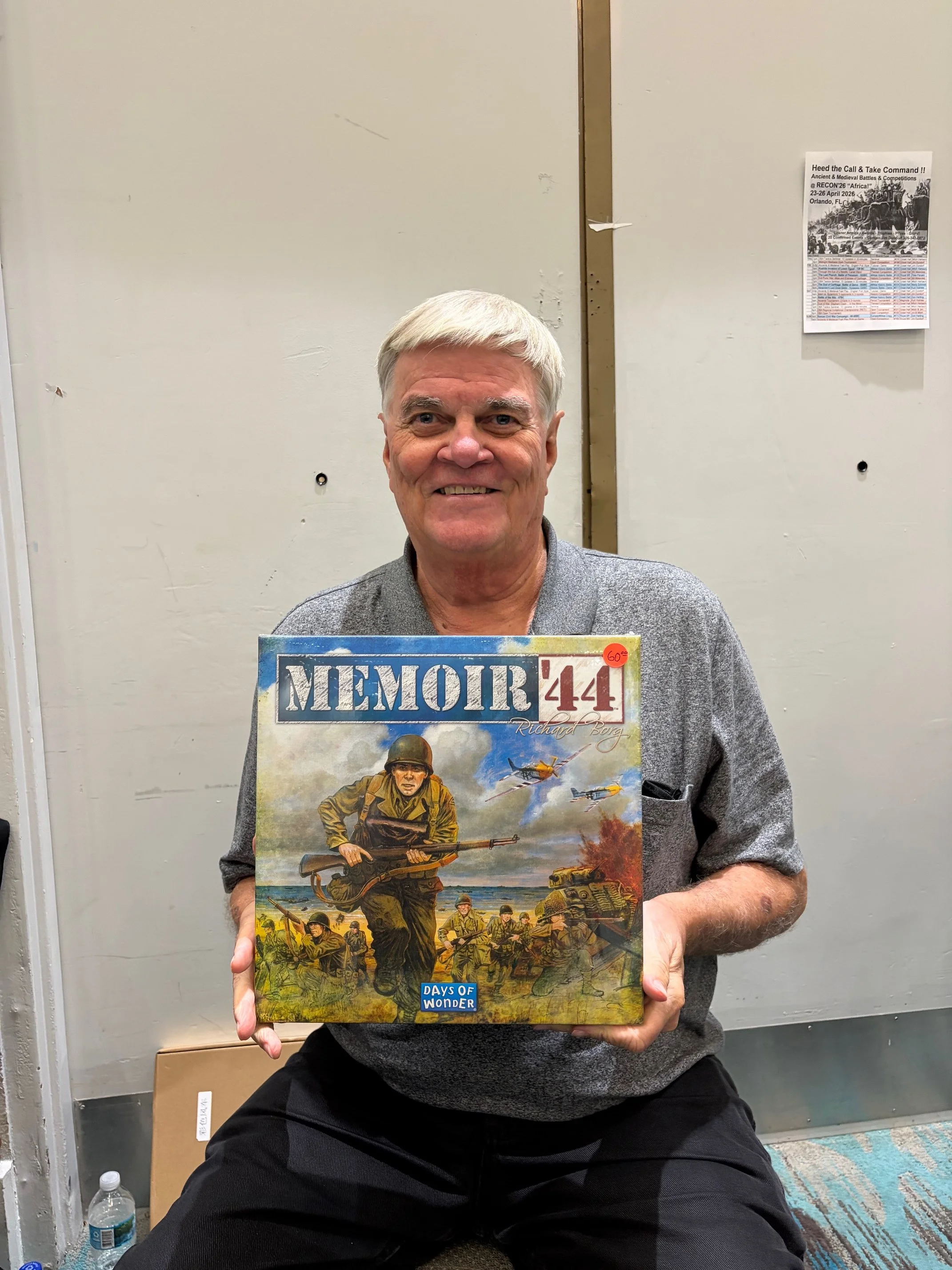
In keeping with our historical theme, I am pleased to introduce you to a hobby that many of you may not be familiar with-Historical Wargaming. If you’re looking for a hobby that’s fun, interactive, competitive and exciting, this might be for you. To give us a better understanding of what this hobby is about, I have invited nationally renowned game designer, Mr. Richard Borg, to BK Nation to explain what historical wargaming is and where he sees the state of the hobby in the future.
KR: Richard, thank you for taking time out of your busy schedule to join BK Nation. Before we begin the interview, tell BK Nation a few little-known facts about you that most people don’t know.
RB: I am an old guy but what I do each day with my great group of friends really do keep me thinking young. My wife Sandy and I have been married 58 years. We have two very adult children and three grandchildren. After graduating from Valparaiso University with a business degree, I worked for JC Penney for 25 years. I retired in 1993 to pursue a second career in game design.
KR: You are one of the iconic figures in the historical wargaming hobby throughout the country today. Tell BK Nation, what exactly is historical wargaming?
RB: Historical wargaming is a hobby that mimics real-world historical battles on a tabletop using miniature figures, or specialized board games. Players act as commanders, using a set of rules to order units, which attempt to navigate terrain and combat. Rules are based on the historical actions and require historical tactics for the specific historical period. It is a game, in which two players or sides are in conflict trying to defeat the opposition to gain victory.
KR: How long have you been in the hobby and what was the first wargame that you played?
RB: Although not a wargame as such, at a very young age I do remember moving armies of my mom’s clothes pins around on the floor. A little later on in grade school, I did have some very early wargames which included; Parker Brother’s “Conflict”, Milton Bradley’s American Heritage series “Dog Fight”, “Battle Cry”, “Hit the Beach” and “Broadside” and of course the classic game of “Risk” with wooden pieces.
KR: What or who influenced you to pursue historical wargaming as a hobby and business?
RB: While in fifth grade, we were in a neighborhood with a lot of kids. We had plenty of toy guns and we spent many afternoons playing army. On TV, we had shows like “Combat” (1962-1967) and Disney’s Davy Crockett miniseries with the third episode “Davy Crockett at the Alamo” (1955). While comic books featured war themes, “Sgt Rock” and “Ghost Tank,” the most important factor other than TV, movies, etc. was the boys who lived across the street and their father. His job required him to go to England on a regular basis. When the dad returned home, he would bring back his sons an assortment of Dinky Toys military miniatures, including soldier figures, tanks and trucks. We spent hours playing with these cool authentic looking toys and the older brother (he was in High School) even created a loose set of rules for us to play. These really neat Dinky Toys and having almost every Marx play set I could buy with my paper route money, and fighting many rubber band wars in the sandbox, is where it all started for me.
KR: How did your former profession help you transition as a game designer?
RB: I am not really sure if I can actually put a finger on just how my career with managing JC Penney retail stores helped me in the career of game design… other than the experience of doing anything in life gives one the opportunity to learn and organize one’s time.
KR: I’m going to put you on the spot now. You have designed and published numerous wargames from the Napoleonic, Ancients, American Revolutionary War, American Civil War, WW I and II era and of course, from other eras. Which one of these wargames is your favorite and why?
RB: Actually, I have been very lucky in that I have licensed as many quote, “non-wargames” as actual games based on war. I do not have a favorite game because I really truly enjoy all games, both games I designed and many other game designs as well. But one sad thing about being a game designer is that your time playing lots of other great games is limited.
KR: Your Command and Colors system is played by thousands of people, including many military veterans and active-duty members throughout the world. Why do you think this system is so popular and revered among wargaming enthusiasts?
RB: Commands & Colors at its heart is a simple system that does a good job of creating a nice play experience. I like to say “the game sort of plays like history reads”. And this is no doubt the reason why the Commands & Colors system is enjoyed by both military personnel and us regular guys and gals.
KR. Your wargame, Memoirs 44, was recently inducted into the Board Game Geek’s Hall of Fame this year. Among your many achievements and accolades, what are you most proud of as a game designer and/or wargame hobbyist?
RB: I am most proud that I have brought some fun and enjoyment into the busy lives of so many friends.
KR. With the popularity of online computer and video games, where do you see the state of historical wargaming in the future? Will the hobby increase, decline, or remain about the same?
RB: I have been told many times that there is a “graying of the hobby” and that wargaming won’t be around much longer. Now although today I do reflect this graying myself, I was told that same thing 30 years ago, so I don’t know if historical wargaming will ever die. It may just morph from painted miniature armies or military style board games, as you point out, into online computer and video games.
KR: Where can BK Nation purchase your wargames?
RB: On-line is a great source to find out more about my game designs and where they are available for purchase.
KR: As we end the interview today, is there anything you’d like to share with BK Nation such as future projects you’re working on, upcoming wargaming conventions, etc.?
RB: I have been blessed because I have had the opportunity to work at something I really enjoy. Game design has also given me the chance to create friendships with so many great individuals. Many of these individuals have shared their knowledge of history, which certainly has gone a long way to help in most of my game designs.
Today as in the past I am still working on other interesting projects and having fun with the help of others.
Thanks Ken, it has been my pleasure.
Historical Events in the Month of May
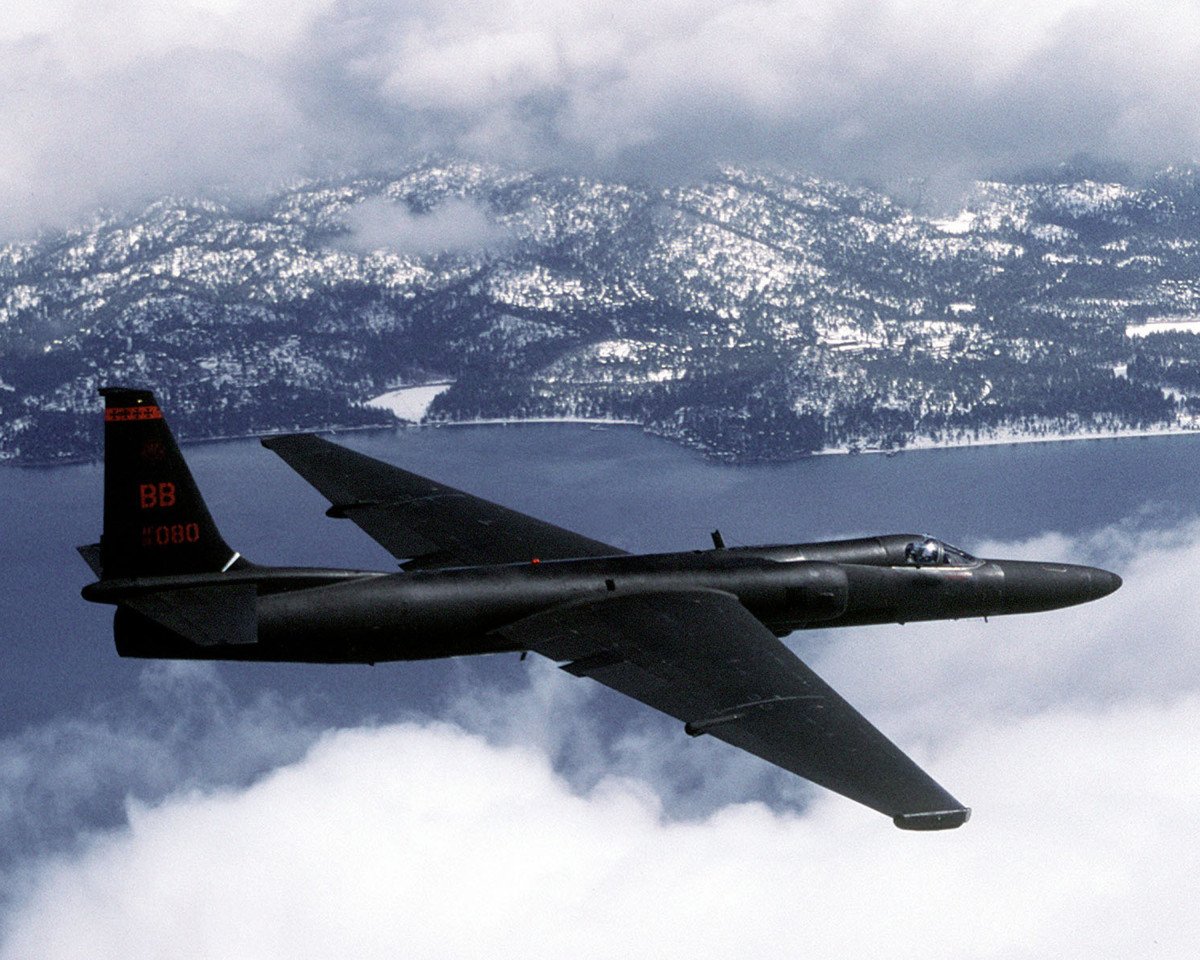
May 1, 1960 - An American U-2 spy plane flying at 60,000 feet was shot down over Sverdlovsk in central Russia on the eve of a summit meeting between President Dwight D. Eisenhower and Soviet Russia's Premier Nikita Khrushchev. The sensational incident caused a cancellation of the meeting and heightened existing Cold War tensions. The pilot, CIA agent Francis Gary Powers, survived the crash, and was tried, convicted and sentenced to 10 years in prison by a Russian court. Two years later he was released to America in exchange for an imprisoned Soviet spy. On his return to America, Powers encountered a hostile public which apparently believed he should not have allowed himself to be captured alive. He died in a helicopter crash in 1977.
May 2, 2011 - U.S. Special Operations Forces killed Osama bin Laden during a raid on his secret compound in Abbottabad, Pakistan. The raid marked the culmination of a decade-long manhunt for the elusive leader of the al-Qaeda terrorist organization based in the Middle East. Bin Laden had ordered the coordinated aerial attacks of September 11th, 2001, in which four American passenger jets were hijacked then crashed, killing nearly 3,000 persons. Two jets had struck and subsequently collapsed the 110-story Twin Towers of the World Trade Center in New York, while another struck the Pentagon building in Washington, D.C. A fourth jet also headed toward Washington had crashed into a field in Pennsylvania as passengers attempted to overpower the hijackers on board.
May 2, 2011 - Golda Meir (1898-1978) was born in Kiev, Russia. She was one of the founders of the modern state of Israel and served as prime minister from 1969 to 1974.
May 4, 1970 - At Kent State University, four students - Allison Krause, 19; Sandra Lee Scheuer, 20; Jeffrey Glenn Miller, 20; and William K. Schroeder, 19 - were killed by National Guardsmen who opened fire on a crowd of 1,000 students protesting President Richard Nixon's decision to invade Cambodia. Eleven others were wounded. The shootings set off tumultuous campus demonstrations across America resulting in the temporary closing of over 450 colleges and universities.
May 5, 1865 - Decoration Day was first observed in the U.S., with the tradition of decorating soldiers' graves from the Civil War with flowers. The observance date was later moved to May 30th and included American graves from World War I and World War II, and became better known as Memorial Day. In 1971, Congress moved Memorial Day to the last Monday in May, thus creating a three-day holiday weekend.
May 6, 1937 - The German airship Hindenburg burst into flames at 7:20 p.m. as it neared the mooring mast at Lakehurst, New Jersey, following a trans-Atlantic voyage. Thirty six of the 97 passengers and crew were killed. The inferno was caught on film and also witnessed by a commentator who broke down amid the emotional impact and exclaimed, "Oh, the humanity!" The accident effectively ended commercial airship traffic.
May 7, 1915 - The British passenger ship Lusitania was torpedoed by a German submarine off the coast of Ireland, losing 1,198 of its 1,924 passengers, including 114 Americans. The attack hastened neutral America's entry into World War I.
May 8, 1942 - During World War II in the Pacific, the Battle of the Coral Sea began in which Japan would suffer its first defeat of the war. The battle, fought off New Guinea, marked the first time in history that two opposing naval forces fought by only using aircraft without the opposing ships ever sighting each other.
May 9, 1862 - During the American Civil War, General David Hunter, Union commander of the Department of the South, issued orders freeing the slaves in South Carolina, Florida and Georgia. He did so without congressional or presidential approval. The orders were countermanded by President Abraham Lincoln ten days later.
May 10, 1869 - The newly constructed tracks of the Union Pacific and Central Pacific railways were first linked at Promontory Point, Utah. A golden spike was driven by Leland Stanford, president of the Central Pacific, to celebrate the linkage. It is said that he missed the spike on his first swing which brought roars of laughter from men who had driven thousands upon thousands of spikes themselves.
May 11, 1969 - During the Vietnam War, the Battle of "Hamburger Hill" began. While attempting to seize the Dong Ap Bia Mountain, U.S. troops repeatedly scaled the hill over a 10-day period and engaged in bloody hand-to-hand combat with the North Vietnamese. After finally securing the objective, American military staff decided to abandon the position, which the North Vietnamese retook shortly thereafter. The battle highlighted the futility of the overall American military strategy.
May 12, 1949 - Soviet Russia lifted its blockade of Berlin. The blockade began on June 24, 1948 and resulted in the Berlin airlift. For 462 days - from June 26, 1948, until September 30, 1949, American and British planes flew about 278,000 flights, delivering 2.3 million tons of food, coal and medical supplies to two million isolated West Berliners. A plane landed in Berlin every minute from 11 Allied staging areas in West Germany. The planes were nicknamed ''candy bombers'' after pilots began tossing sweets to children. They also flew out millions of dollars worth of products manufactured in West Berlin.
May 13, 1846 - At the request of President James K. Polk, Congress declared war on Mexico. The controversial struggle eventually cost the lives of 11,300 U.S. soldiers and resulted in the annexation of lands that became parts of Oklahoma, New Mexico, Arizona, Nevada, California, Utah and Colorado. The war ended in 1848 with the Treaty of Guadalupe Hidalgo.
May 14, 1804 - Meriwether Lewis and William Clark departed St. Louis on their expedition to explore the Northwest. They arrived at the Pacific coast of Oregon in November of 1805 and returned to St. Louis in September of 1806, completing a journey of about 6,000 miles.
May 16, 1862 - During the American Civil War, Union General Benjamin Butler, military governor of New Orleans, issued his "Woman Order" declaring that any Southern woman showing disrespect for Union soldiers or the U.S. would be regarded as a woman of the town, or prostitute. This and other controversial acts by Butler set the stage for his dismissal as military governor in December 1862.
May 17, 1954 - In Brown v. Board of Education, the U.S. Supreme Court unanimously ruled that segregation of public schools "solely on the basis of race" denies black children "equal educational opportunity" even though "physical facilities and other 'tangible' factors may have been equal. Separate educational facilities are inherently unequal." Thurgood Marshall had argued the case before the Court. He went to become the first African American appointed to the Supreme Court.
May 18, 1804 - Napoleon Bonaparte became Emperor of France, snatching the crown from the hands of Pope Pius VII during the actual coronation ceremony, and then crowning himself.
May 19, 1943 - During World War II in Europe, Royal Air Force bombers successfully attacked dams in the German Ruhr Valley using innovative ball-shaped bouncing bombs that skipped along the water and exploded against the dams. The dams had provided drinking water for 4 million persons and supplied 75% of the electrical power for industry in the area.
May 20, 1862 - President Abraham Lincoln signed the Homestead Act opening millions of acres of government owned land in the West to "homesteaders" who could acquire up to 160 acres by living on the land and cultivating it for five years, paying just $1.25 per acre.
May 21, 1991 - Former Indian Prime Minister Rajiv Gandhi was assassinated in the midst of a re-election campaign, killed by a bomb hidden in a bouquet of flowers. He had served as prime minister from 1984 to 1989, succeeding his mother, Indira Gandhi, who was assassinated in 1984.
May 22, 1972 - President Richard Nixon became the first American president to visit Moscow. Four days later, Nixon and Soviet Russia's leader Leonid Brezhnev signed a pact pledging to freeze nuclear arsenals at current levels.
May 23, 1846 - The first American female attorney Arabella Mansfield was born near Burlington, Iowa (as Belle Aurelia Babb). She was certified in 1869 as an attorney and admitted to the Iowa bar, but never practiced law. Instead she chose a career as a college educator and administrator. She was also instrumental in the founding of the Iowa Suffrage Society in 1870.
May 24, 1844 - Telegraph inventor Samuel Morse sent the first official telegraph message, "What hath God wrought?" from the Capitol building in Washington, D.C., to Baltimore.
May 25, 1787 - The Constitutional Convention began in Philadelphia with delegates from seven states forming a quorum.
May 26, 1940 - The Dunkirk evacuation began in order to save the British Expeditionary Force trapped by advancing German armies on the northern coast of France. Boats and vessels of all shapes and sizes ferried 200,000 British and 140,000 French and Belgian soldiers across the English Channel by June 2nd.
May 27, 1937 - In San Francisco, 200,000 people celebrated the grand opening of the Golden Gate Bridge by strolling across it.
May 28, 1961 - Amnesty International was founded by London lawyer Peter Berenson. He read about the arrest of a group of students in Portugal then launched a one-year campaign to free them called Appeal for Amnesty. Today Amnesty International has over a million members in 150 countries working to free prisoners of conscience, stop torture and the death penalty, and guarantee human rights for women.
May 29, 1453 - The city of Constantinople was captured by the Turks, who renamed it Istanbul. This marked the end of the Byzantine Empire as Istanbul became the capital of the Ottoman Empire.
May 30, 1922 - The Lincoln Memorial in Washington, D.C., was dedicated. The Memorial was designed by architect Henry Bacon and features a compelling statue of "Seated Lincoln" by sculptor Daniel Chester French.
May 31, 1862 - During the American Civil War, the Battle of Seven Pines occurred as Confederate General Joseph E. Johnston's Army attacked Union General George McClellan's troops in front of Richmond Virginia and nearly defeated them. Johnston was badly wounded. Confederate General Robert E. Lee then assumed command, replacing the wounded Johnston. Lee renamed his force the Army of Northern Virginia.
PARTING THOUGHTS
The month of May is filled with excitement and new beginnings as we witness the budding of beautiful flowers and the lush green grass and plants that compliment the splendor of our homes. Many people throughout the country will be attending high school and college graduations which mark the beginning of a new chapter in these graduate’s lives.
As we celebrate this month, let us pause to remember some important days such as Mother’s Day on the 10th as we honor our mothers. Memorial Day is celebrated on the 25th, which is a day of remembrance and respect for the sacrifices made by members of our Armed Forces. And of course, let us not forget Teacher Appreciation Week to honor our teachers, both past and present, for their contributions to society and in their own way, helping us become the productive and successful citizens we are today.
Until next time BK nation, stay safe and may this month be filled with peace, happiness and much success.